
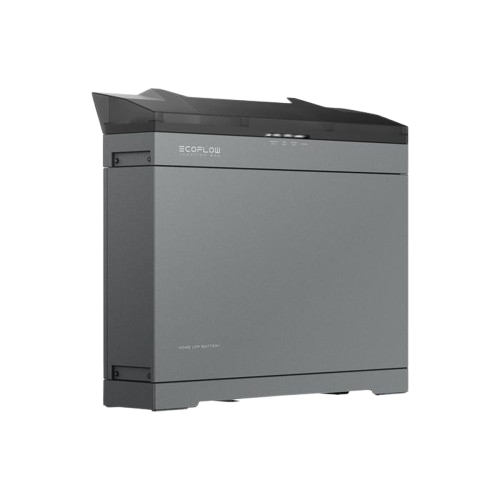
EcoFlow PowerOcean LFP Battery 5kWh
High-Voltage Lithium Iron Phosphate (LFP) Energy Storage Battery
The EcoFlow PowerOcean LFP Battery 5kWh is a high-voltage lithium iron phosphate (LFP) battery module engineered for integration with the EcoFlow PowerOcean energy storage system. It provides reliable energy storage for residential and commercial solar installations, enabling excess photovoltaic (PV) energy to be stored and discharged when required.
The battery is designed for high-voltage energy storage applications, working in conjunction with compatible PowerOcean hybrid inverters to deliver efficient solar energy utilisation, backup power and scalable battery capacity.
Key Technical Features
5kWh Energy Storage Capacity
Provides approximately 5kWh of usable energy storage, allowing surplus PV generation to be stored for later consumption.
Lithium Iron Phosphate (LFP) Chemistry
Utilises LFP cell technology, offering high thermal stability, strong safety characteristics and long-term cycling performance compared with conventional lithium-ion chemistries.
High-Voltage Battery Architecture
The battery operates as part of the PowerOcean high-voltage DC battery system. The high-voltage architecture helps reduce DC current for a given power level, contributing to lower cable losses and improved system efficiency.
Modular Battery Configuration
The PowerOcean battery system is designed for modular expansion. Multiple compatible battery modules can be configured together to increase total energy-storage capacity according to the installation’s load profile and energy requirements.
Solar Energy Storage
During periods of high PV generation, excess solar energy can be directed to the battery instead of being wasted or exported. The stored energy can subsequently be discharged during the evening, periods of low solar production or grid outages.
Intelligent Battery Management System (BMS)
The integrated battery-management system continuously monitors key battery operating parameters and manages charging, discharging and protection functions. This helps maintain safe operating conditions and optimise battery performance.
Advanced Protection System
The battery system incorporates protection and monitoring functions designed to help protect against abnormal electrical and operating conditions, including overvoltage, undervoltage, overcurrent and temperature-related conditions.
Scalable Energy Storage
The modular architecture makes the PowerOcean platform suitable for applications where battery capacity may need to increase as electricity demand grows.
Technical Specifications
| Parameter | Specification |
|---|---|
| Product Type | High-Voltage LFP Battery Module |
| Nominal Energy Capacity | 5kWh |
| Battery Chemistry | Lithium Iron Phosphate (LFP) |
| System Architecture | High-Voltage DC |
| Battery Management | Integrated Battery Management System (BMS) |
| Configuration | Modular |
| System Expansion | Supports additional compatible battery modules |
| Application | Solar Energy Storage / Backup Power |
| Integration | EcoFlow PowerOcean Energy Storage System |
| Communication | System-level battery/inverter communication |
| Installation | Indoor / Outdoor installation subject to manufacturer requirements |
| Cooling | Passive / natural thermal management |
| Protection | Integrated electrical and thermal protection |
Important: Exact voltage range, maximum charge/discharge current, operating temperature, IP rating, dimensions and weight can vary according to the specific PowerOcean battery generation and regional model. Confirm the exact model number on the product datasheet before installation.
High-Voltage Energy Storage Architecture
The PowerOcean system uses a high-voltage DC battery architecture rather than a conventional low-voltage 48V battery bank.
This provides several technical advantages:
- Lower DC current at equivalent power levels
- Reduced resistive cable losses
- Improved transmission efficiency between the battery and inverter
- Smaller DC conductor requirements compared with equivalent low-voltage systems
- Better suitability for higher-power energy-storage applications
The battery communicates with the compatible PowerOcean inverter through the system’s battery-management and communication architecture, allowing the inverter to coordinate charging, discharging and energy-flow management.
Solar Charging & Energy Management
The PowerOcean 5kWh battery can be used to store excess energy generated by a connected PV system.
A typical energy flow is:
Solar Panels → PowerOcean Hybrid Inverter → Home/Business Loads + PowerOcean LFP Battery
During periods of solar surplus:
PV Generation → Battery Charging
When solar production decreases:
Battery → Hybrid Inverter → AC Loads
During a grid outage, the compatible PowerOcean system can automatically transition to backup operation, subject to the configuration of the inverter, battery system and backup circuits.
Battery Management System (BMS)
The integrated BMS is a critical component of the battery architecture. It monitors and manages battery operating conditions to support safe and efficient operation.
Typical BMS functions include:
- Cell voltage monitoring
- Battery current monitoring
- Temperature monitoring
- State of Charge (SOC) estimation
- Charge control
- Discharge control
- Overvoltage protection
- Undervoltage protection
- Overcurrent protection
- Thermal protection
- Fault detection
- Communication with the hybrid inverter
This coordinated control allows the inverter and battery to operate as an integrated energy-storage system rather than as independent components.
Energy Storage Applications
The EcoFlow PowerOcean LFP Battery 5kWh is suitable for:
Residential Solar Systems
Store daytime solar generation for evening and overnight consumption.
Backup Power Systems
Provide stored energy for essential household loads during utility outages when paired with a compatible PowerOcean inverter.
Commercial Energy Storage
Support offices, shops and small commercial facilities requiring additional energy-storage capacity.
Solar Self-Consumption
Increase the percentage of generated solar energy that is consumed on-site rather than exported.
Energy Storage Expansion
Add compatible battery modules to increase storage capacity as the site’s energy requirements increase.
Example Energy Calculations
A nominal 5kWh battery contains approximately 5,000Wh of stored energy.
Theoretical runtime can be estimated using:
Runtime (hours) = Battery Energy (Wh) ÷ Load Power (W)
For example:
| Connected Load | Approx. Theoretical Runtime |
|---|---|
| 100W | 50 hours |
| 250W | 20 hours |
| 500W | 10 hours |
| 1,000W | 5 hours |
| 2,000W | 2.5 hours |
Actual runtime will be lower because of inverter conversion losses, battery operating limits, temperature, battery SOC and variations in appliance power consumption.
System Integration
For a complete PowerOcean energy-storage installation, the 5kWh LFP battery is typically integrated with:
- Solar PV modules
- EcoFlow PowerOcean hybrid inverter
- Battery communication system
- AC distribution/protection equipment
- PV protection equipment
- Appropriately rated DC and AC cabling
- Grid connection
- Backup/essential-load circuits
Installation should be performed by a qualified solar/electrical professional in accordance with EcoFlow’s installation documentation, local electrical regulations and applicable protection requirements.
Why Choose the PowerOcean 5kWh LFP Battery?
The EcoFlow PowerOcean LFP Battery 5kWh combines high-voltage battery architecture, LFP chemistry, integrated battery management and modular system expansion into a scalable energy-storage platform.
It is particularly suitable for installations requiring solar energy storage, increased solar self-consumption, reliable backup power and future battery-capacity expansion.
Product Highlights
- 5kWh energy capacity
- LFP battery chemistry
- High-voltage DC architecture
- Integrated BMS
- Modular and expandable design
- Solar energy storage
- Backup power capability when integrated with a compatible inverter
- Intelligent inverter-battery communication
- Designed for residential and commercial energy-storage applications